
NEIGHBOR IS A VERB
On December 1, 2025 federal agents descended on the Twin Cities to begin ‘Operation Metro Surge.’ Quickly, the Department of Homeland Security (DHS) called it "the largest immigration enforcement operation ever". Federal agents rammed cars and boxed in drivers, smashed windows, entered homes without judicial warrants, pepper sprayed observers at close range, and shot three Minneapolis residents, two fatally. Minnesota responded with neighboring— acts of care rooted in love and in the understanding that what happens to one of us in the morning happens to all of us at nightfall.
Nearly overnight, threads of concern wove a web of care strong enough to hold entire communities. And now, those threads spool across the country. Learn more about each of those threads here.
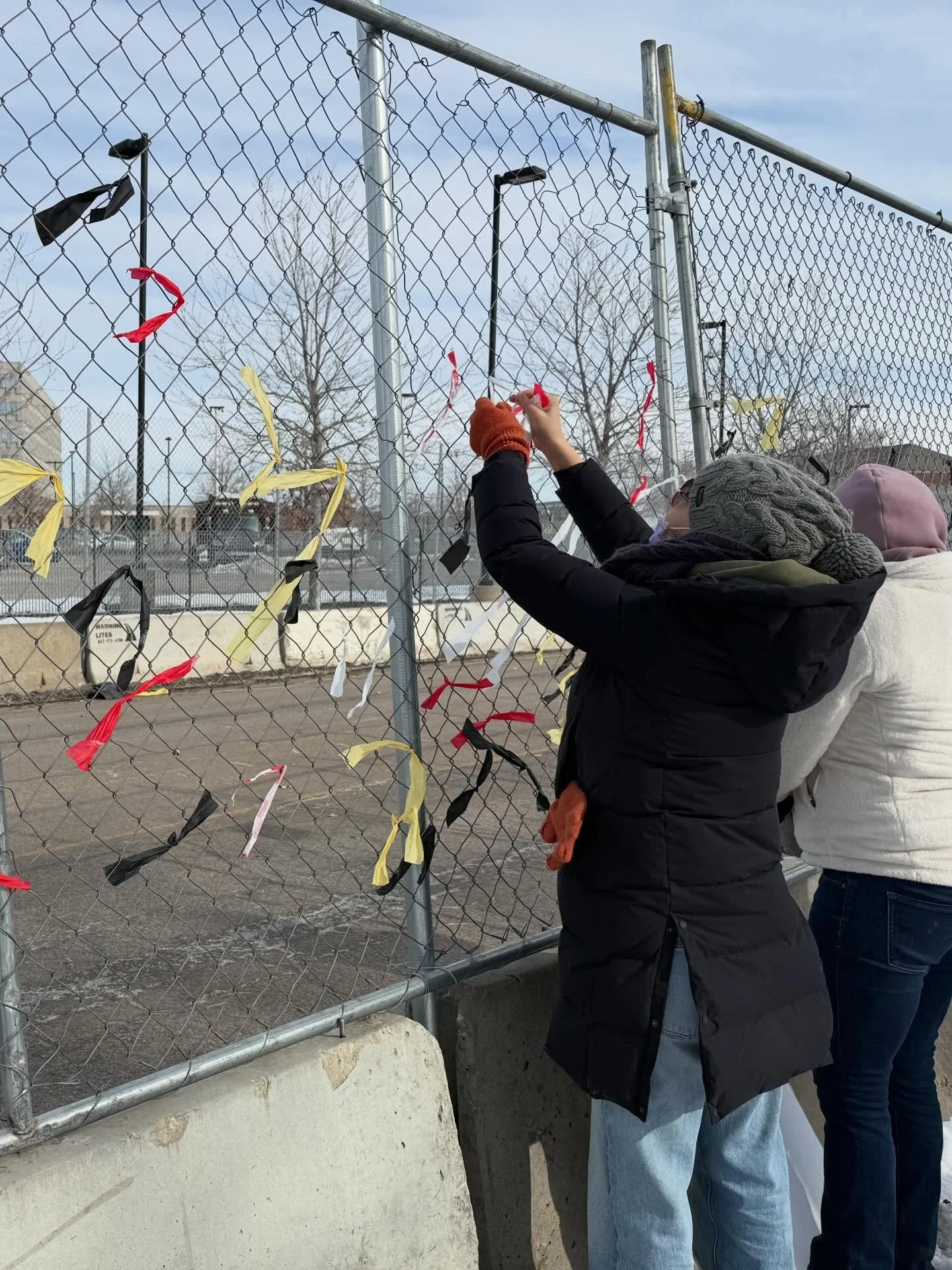
On February 7, 2026, neighbors joined the Indigenous-led Not On Native Land rally and added prayer ties to the barricade fence erected by around the Bishop Henry Whipple Federal Building. The building is named for an Episcopal Bishop and sits on land that is sacred to Dakota people and that the United States used as a concentration camp for the Dakota in 1863. Today, there is an immigration court in the office building and the Department of Homeland Security uses the building to stage ICE and Border Patrol activities. Rallygoers added a prayer tie for each neighbor then-abducted during Operation Metro Surge . Photo credit: Longfellow Nokomis Messenger.
HEALING DEMOCRACY
As the 2026 election draws near, many of us are asking ourselves how we can help ourselves and our communities stay connected, grounded, and safe leading up to November 3. MARCH joins MNIPL and the Movement Chaplains Network in launching Healing Democracy, a movement to organize people and communities towards groundedness in the time before, during, and after the election.
Join us in any or all of three ways:
Poll Chaplaincy. For five years, trained Poll Chaplains have brought calm, nonpartisan care to election spaces in Minnesota. Poll Chaplains accompany people in and around the voting experience. They offer a calm, compassionate presence, help lower tension, connect people with trusted resources when needed, and make space for the hope, pride, and joy that are also part of participating in democracy.
Digital Democracy. Digital Chaplains bring grounded, caring presence into the online spaces and relationships they already inhabit. They listen, offer support, share trustworthy resources, and help people navigate fear, uncertainty, and difficult moments with care.
Congregational Care Teams. Help your community of faith, conscience, religious or spiritual practice become a place of care. Community Care Teams equip congregations and other communities to care for their people and neighbors before, during, and after the election. Together, communities identify the relationships, spaces, spiritual practices, and gifts they already have and build a plan for offering grounded, compassionate care when it is needed most.
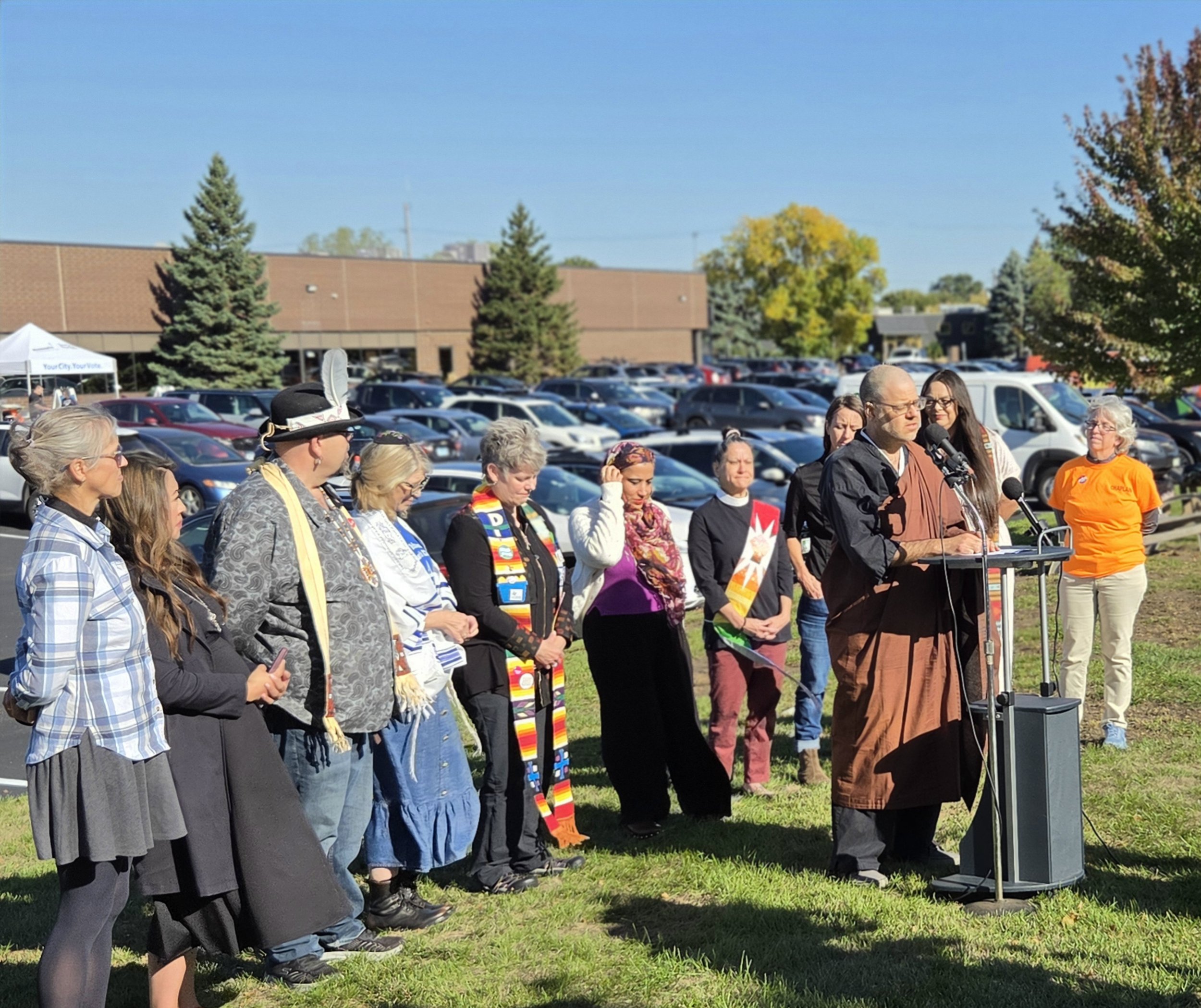
Buddhist, Christian, Indigenous, Jewish, and Muslim faith leaders gather to launch the Healing Democracy initiative and pledge to vote early so that they can support their communities ahead of, on, and after Election Day.


THE CALL
As heavily armed federal agents poured into our streets, it was clear that Operation Metro Surge was much more than immigration enforcement. It was a test of the soul of our country.
At first, our days were a blur of whistles, rapid-response group chats, and mutual aid coordination. The presence of a militarized force that was more than three times larger than our police departments was overwhelming. But soon we started to see the holes. Restaurants closed. Caregivers were gone. Families had holes where loved ones had been.
Defending as many neighbors as we could was no longer enough. Others needed to see what we saw.
On January 16, we issued The Call - a national invitation to faith leaders to come to Minneapolis. Like Rev. Dr. Martin Luther King Jr.’s call to Selma, MARCH’s Call asked clergy to bear witness, build relationship, and root in resistance. Like the call to Selma, we knew that the nation needed to see what was happening. And like the call to Selma, we issued the call because we knew that the violence that came to Minnesota would not stay in Minnesota.
Over 1500 people responded, and on a week’s notice, over 650 people from so many faith communities and traditions traveled to Minneapolis to witness, learn, reflect, and take action in solidarity with immigrant communities.
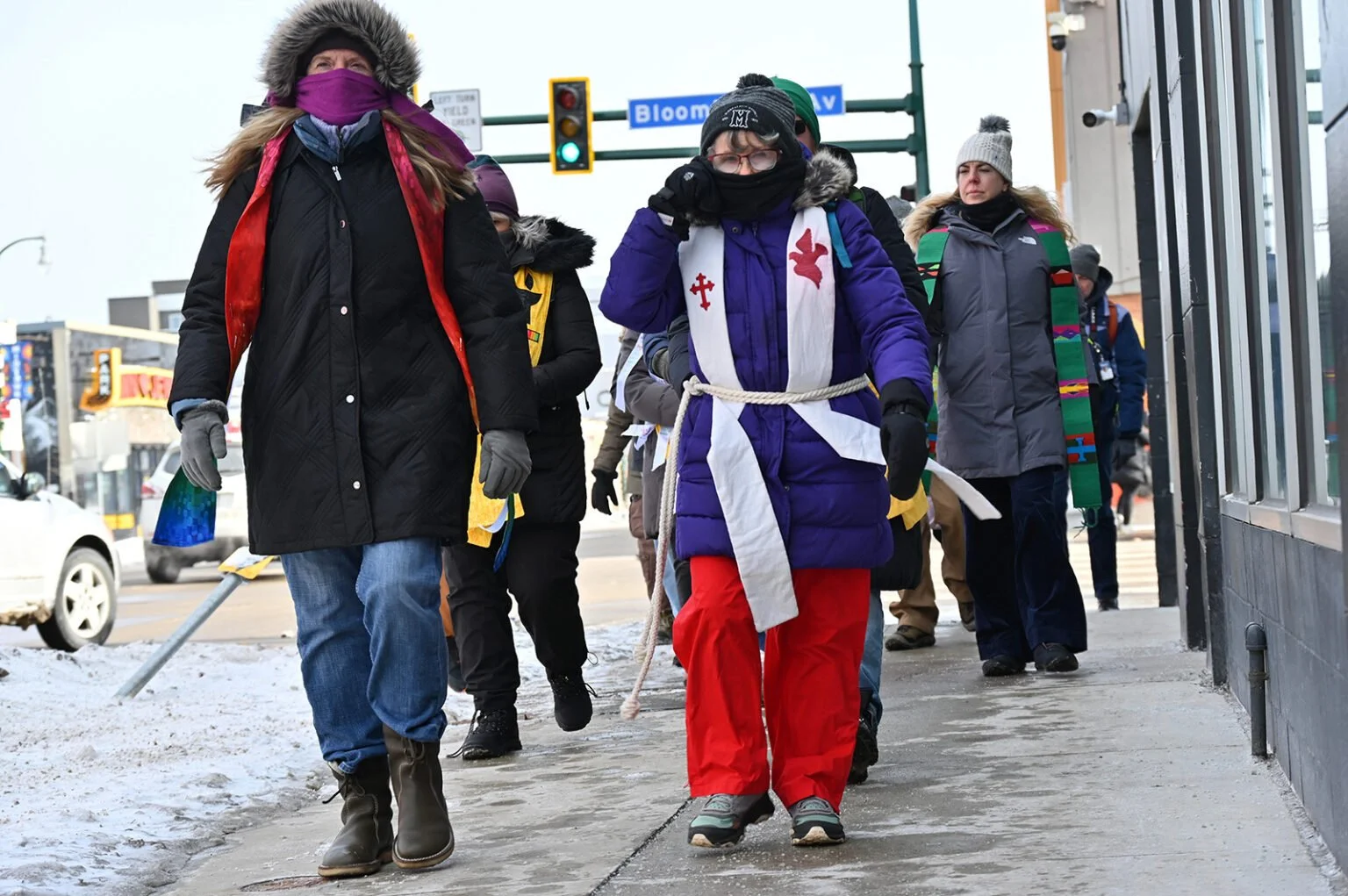
Clergy and people of faith and conscience observe and document the actions of immigration enforcement agents during The Call to Minneapolis. Photo Credit: RNS photo/Jack Jenkins
THE CARE
As neighbors leapt to community defense, it was soon clear that the trauma of observing daily (and sometimes hourly) violence outstripped our natural capacity to metabolize it. MARCH leaders joined other local spiritual and healing practitioners to step into the breach. The nightly virtual healing space built on the concept of pastoral care but was open to people of all traditions and none at all. It quickly spread to all corners of the state.
Then, on January 24, just two days after we hosted The Call, Alex Pretti was observing the actions of federal agents on Nicollet Avenue, an immigrant corridor. Suddenly, Customs and Border Patrol officers pepper sprayed, tackled to the ground, pinned down, and then point-blank shot Alex Pretti at least ten times. Within hours, news coverage reported that one White House official called Mr. Pretti a “domestic terrorist” who “tried to assassinate federal law endorsement.” The Department of Homeland Security said that Mr. Pretti “attacked” the federal officers while “brandishing” a firearm, and that the scene “look[ed] like a situation where an individual wanted to do maximum damage and massacre law enforcement.”
The agents’ killing of Mr. Pretti was far from the first time that agents perpetrated violence against Minnesotans. But so many videos from so many perspectives undermined the federal narrative.
Our diverse faiths and traditions call us all to tell the truth— even, and especially, when it’s hard. So MARCH called on our community to view the eye-witness footage and then tell the world what they saw. We asked our country to believe #EyesNotLies.

THE CLERGY
Even as we issued The Call, offered spiritual support to an again-grieving community, and urged a national response to the federal killings, clergy leaders within MARCH worked to reach our neighbors inside the Whipple building that held detainees. Each sought to answer their own call to offer pastoral care to detainees. But ICE refused their entry— just as they had at ICE detention centers around the country— blocking the clergy’s First Amendment right offer and detainees’ right to receive pastoral care as an exercise of their religions. These initial attempts became the foundation of a federal lawsuit seeking pastoral access to the Whipple building.
In February 2026, the United Church of Christ (UCC) Minnesota Conference, the Minneapolis Area Synod of the Evangelical Lutheran Church in America (ELCA), and Christopher Collins, a Jesuit priest and pastor, sued the Department of Homeland security. On March 20, a federal judge granted a preliminary injunction, ordering DHS to remove any blanket prohibition on clergy visits and to implement a “workable process” that allowed clergy access.
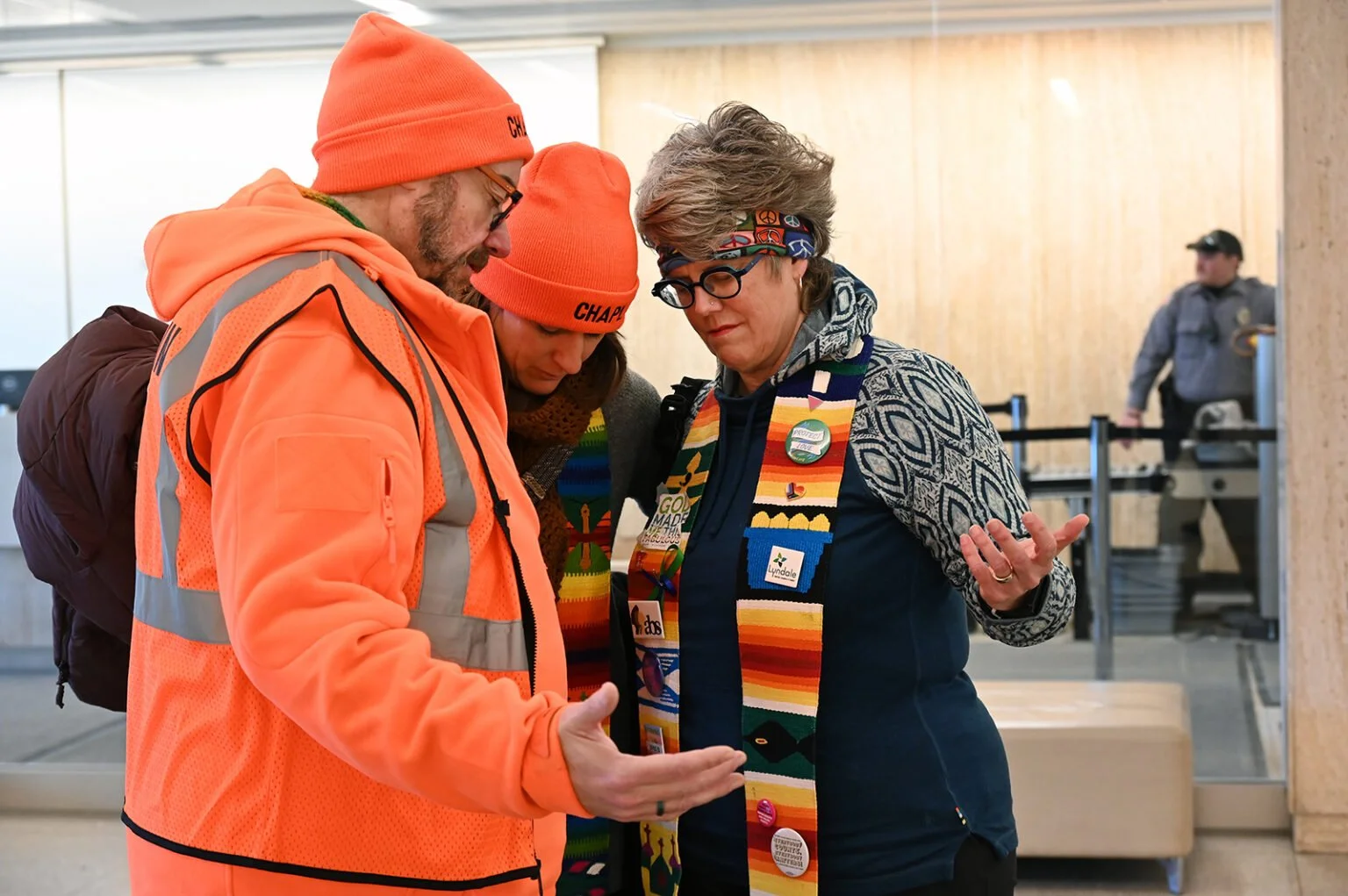
The Revs. T. Michael Rock, from left, Susie Hayward and Rebecca Voelkel pray in the lobby of the Bishop Henry Whipple Building while attempting to minister to detainees, Jan. 13, 2026, in Minneapolis. Photo Credit: RNS photo/Jack Jenkins
THE FUND
The violence of Operation Metro Surge flooded Minnesota streets. Agents seized and injured citizens and non-citizens alike, often emboldened to “take unconstitutional actions.”
That recklessness so endangered our community that the Surge forced many of our neighbors chose to shelter in place. We are only now learning the devastation the federal Operation caused. Schools pivoted from places of engagement and academics to crisis response. The cost to Minneapolis alone was at least $203.1 million. Minnesotans afraid to leave home for work lost over $240 million in wages. Small businesses in St. Paul and Minneapolis lost over $600 million in revenue. But families still needed to eat. And for many, the only way to stay safe was to pay rent.
But we know that all of our stories are bound together and that liberty and justice for some can never be freedom. Throughout Operation Metro Surge, MARCH crowdsourced mutual aid to help fill these gaps. From across the country and around the world, over 1,300 individuals, artist collectives, and congregations supported Minnesota through the MN Together Fund. We shared these funds— and the love notes that contributors also offered— with trusted partners best positioned to meet the emerging needs of our neighbors. To support ongoing work to transition families out of this federally created economic crisis, please join us here.

MN<>TX
Today, thousands of our neighbors are— gone. Mothers. Grandfathers. Teachers. Merchants. Children. Neighbors. Missing from our streets, our congregations, our homes. Each life that ICE took from ours left a memory-shaped hole.
According to federal data, the U.S. sent about a third of our Minnesota neighbors detained during Operation Metro Surge to Texas, where the federal government has been building detention warehouses for years. So we went to Texas, too.
We sent delegations of faith and spiritual leaders from Minnesota to Texas to bear witness to the detention centers and build relationships with those who are caring for our neighbors on the other side of this human pipeline. From that foundation of solidarity and connection, we are working to end the systemic conditions that make this form of human misery possible.
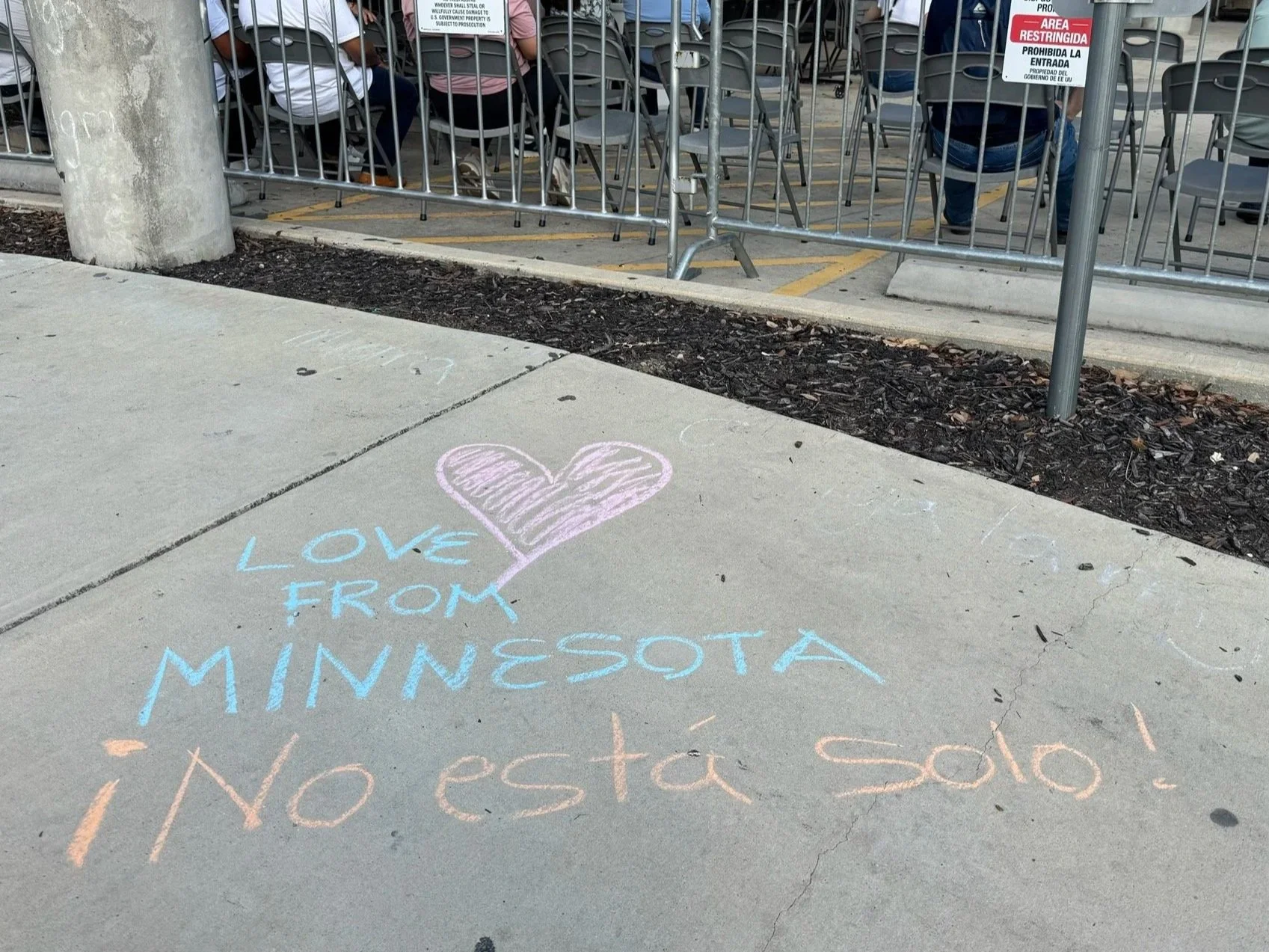
A message from MARCH faith leader at Checkpoint ICE— the location where people in 32 Texas counties who have filed immigration, asylum, and refugee applications must check in to keep their legal applications pending. Applicants must wait for their required appointments outside the building. There are folding chairs under a tent for those who arrive early enough, and lines of barricades in the sun for those who don’t. This waiting area is staffed by GEO Group— the for-profit detention corporation that runs Delaney and dozens of other ICE facilities and prisons around the country.